
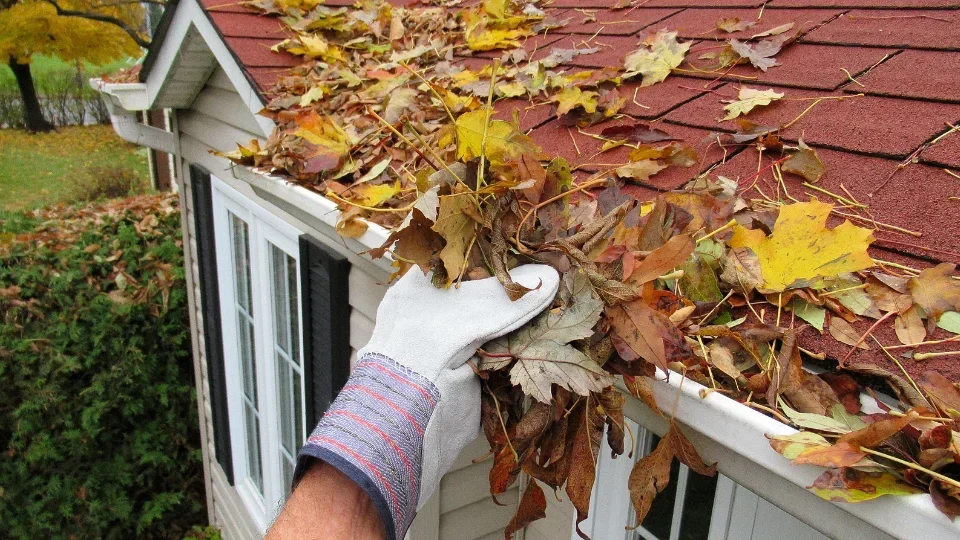
Autumn leaves can collect quickly in roof valleys, gutters, and downspouts. When heavy rain follows, debris may slow drainage and send water over gutter edges or back toward vulnerable roof areas. Seasonal roof and gutter maintenance helps your home move water away as intended.
Treat the Roof and Gutters as One Drainage System
Your roof sheds rain into the gutters, which carry it toward the downspouts and away from the house. Debris in a valley can hold moisture, a clogged outlet can cause overflow, and a poorly placed downspout can release water beside the foundation.
Good roof and gutter maintenance follows this entire route. Cleaning one gutter section will not correct a disconnected downspout, damaged flashing, or low area where water remains after a storm.
Begin Roof and Gutter Maintenance With a Safe Review
Walk around the home before leaves begin falling heavily. From the ground, look for lifted or missing shingles, damaged roof edges, sagging gutters, separated joints, loose downspouts, and stains on siding or fascia.
Check the attic after rain for damp insulation, water stains, musty odors, or daylight entering through unexpected openings. These signs can show that professional evaluation is needed.
Avoid walking on a wet, steep, or unfamiliar roof. Homeowners who cannot safely reach their gutters should hire a qualified professional rather than work from an unstable ladder.
Remove Leaves From Roof Valleys and Low Areas
Leaves and small branches often settle where roof sections meet, behind chimneys, and around skylights or vents. Wet debris can hold moisture against roofing materials and obstruct the path rainwater should follow.
Roof and gutter maintenance includes removing this buildup without damaging the roof covering. A roofing professional can clean difficult areas while checking nearby flashing and seals.
Clean and Test the Gutters
Remove leaves, seed pods, twigs, roofing granules, and compacted debris from gutter channels and outlets. Downspouts also need attention because a blockage inside the pipe may not be visible from above.
After cleaning, controlled water flow can identify slow drainage, leaking seams, and blocked downspouts. Water should move toward the outlets without remaining in long gutter sections.
The National Weather Service advises clearing clogged gutters and downspouts before storms to support water flow during heavy rainfall. Complete roof and gutter maintenance before the trees are bare, then check the system again after another large wave of leaves.
Check Gutter Slope, Fasteners, and Seams
Gutters need a slight slope toward their outlets. Standing water can point to an incorrect pitch, sagging section, or obstruction. Wet leaves add weight and place more stress on loose hangers and fascia boards.
Look for gaps at corners, end caps, and downspout connections. Dark streaks, peeling paint, soft wood, or erosion beneath a joint may indicate recurring leakage.
The Insurance Institute for Business and Home Safety recommends regular roof drainage inspections, with more frequent attention when leaves have caused past clogs. Use that history to plan roof and gutter maintenance for your property.
Direct Downspout Water Away From the House
A clean gutter system can still create problems when downspouts empty beside the foundation. Extensions or approved drainage connections should direct runoff to a suitable location without creating a walkway hazard.
The University of Missouri Extension recommends aiming downspouts away from foundations and paved surfaces when site conditions permit. Watch for erosion, basement dampness, or water collecting near the house after rain.
Observe the System During Heavy Rain
A safe observation from indoors or ground level can reveal issues that are difficult to spot in dry weather. Look for water spilling over gutter edges, leaking behind the gutter, overshooting the channel, or pooling near downspouts.
Stay away from ladders, roofs, flooded areas, and electrical hazards during a storm. Record the location and arrange an inspection after conditions improve. Ready.gov also recommends keeping gutters and drains free of debris for flood preparation.
Do Gutter Guards Eliminate Cleaning?
Gutter guards can reduce debris entering a system, but they do not replace roof and gutter maintenance. Leaves may collect on top, small particles can pass through, and debris can gather in roof valleys.
Check that guards remain attached, water enters the gutter during rain, and buildup is not directing runoff over the roof edge.
Schedule Roof and Gutter Maintenance With Signature Exteriors
Signature Exteriors provides roof inspections, repairs, replacements, and gutter services for homeowners in St. Charles, St. Louis, and surrounding communities. We can examine the connected drainage system and identify damaged materials, weak attachments, and water-flow concerns.
Contact Signature Exteriors to schedule an exterior evaluation before heavy leaves and rain arrive. Our team can help you plan roof and gutter maintenance that protects your home through fall and the changing seasons ahead.